Tracing Journal: Cornish BD-1 Bass Drive
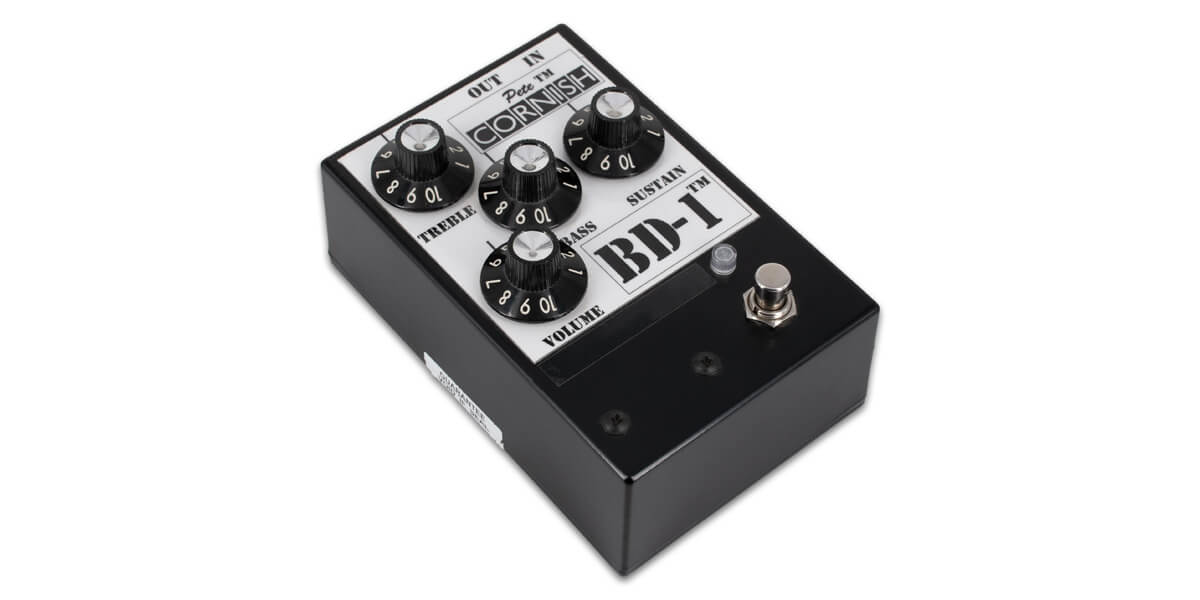
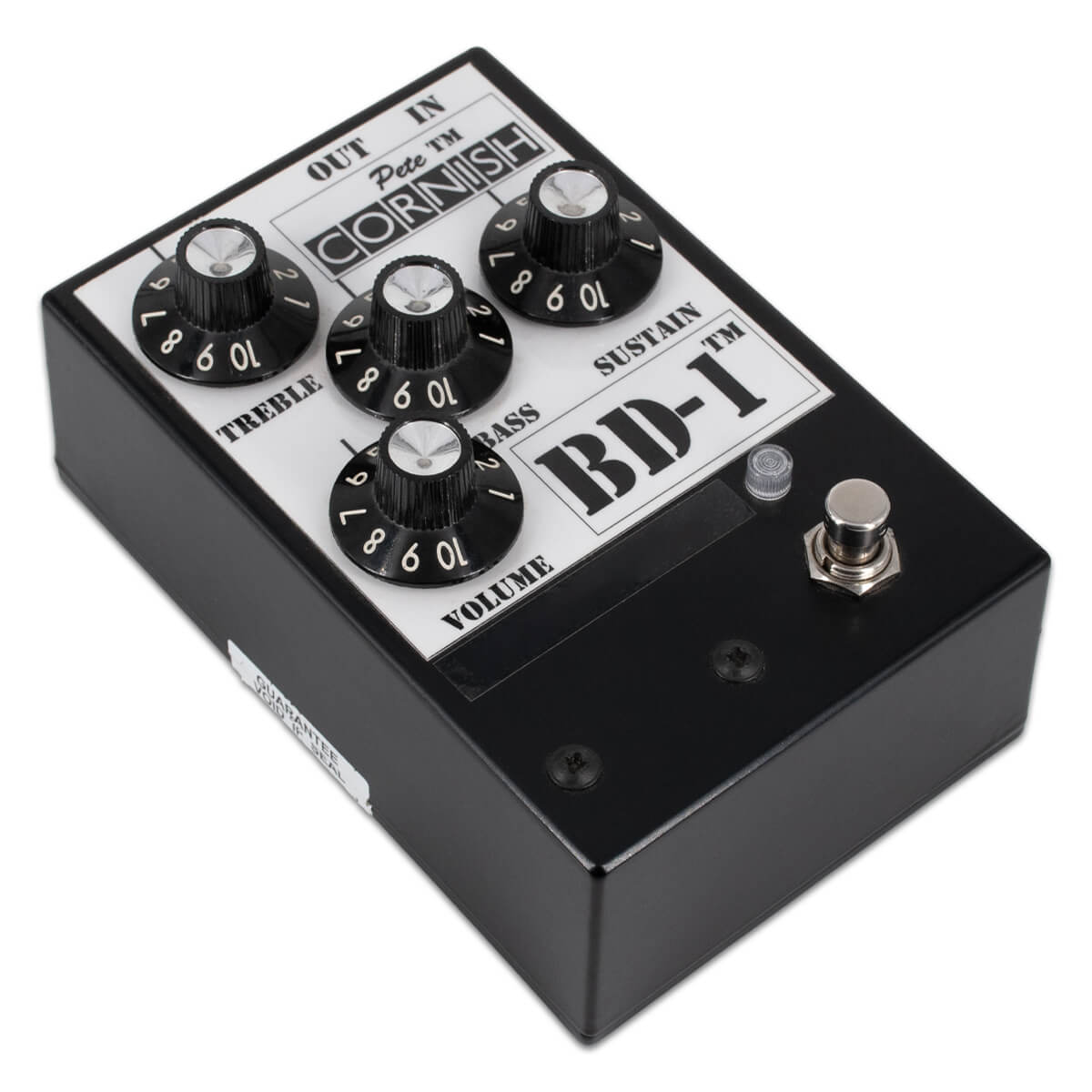
Today we’re hitting something of a milestone: we traced the last of the standard Cornish pedals, the BD-1 bass overdrive.
This is our eleventh Cornish trace if you can believe it.[1] There are a few others in his lineup, but they’re all situation-specific utility pedals and not traditional effects, so this may end up being the final Cornish tracing journal we do.
The BD-1 was released in 2014. To date it’s the only Cornish effect designed specifically for bass. Here’s a demo by Simon Gotthelf:
It claims to be a new and original design. Pete says that about many of his circuits, but we’ve found this to be stretching the truth on more than one occasion in the past, so there was only one way to find out for sure.
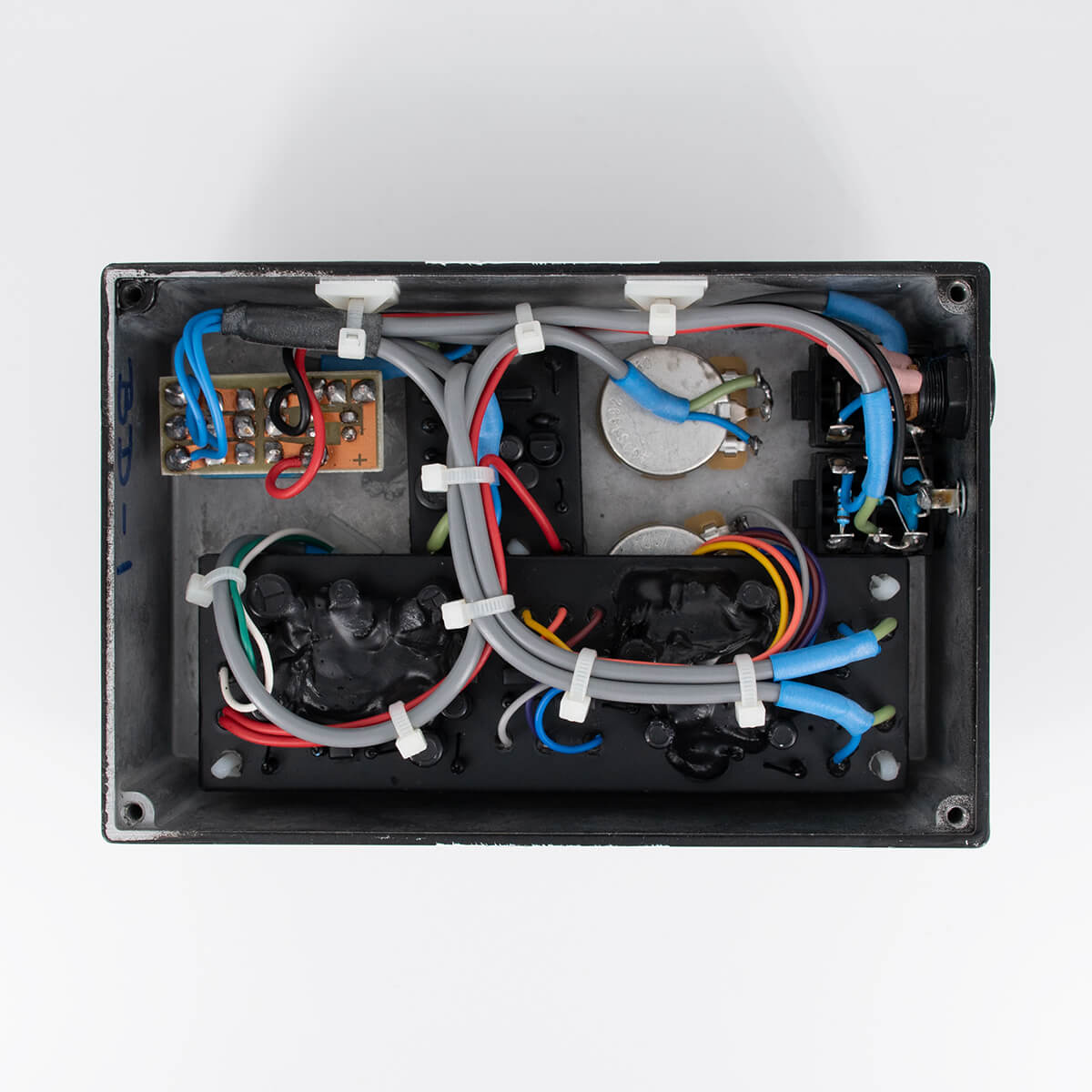
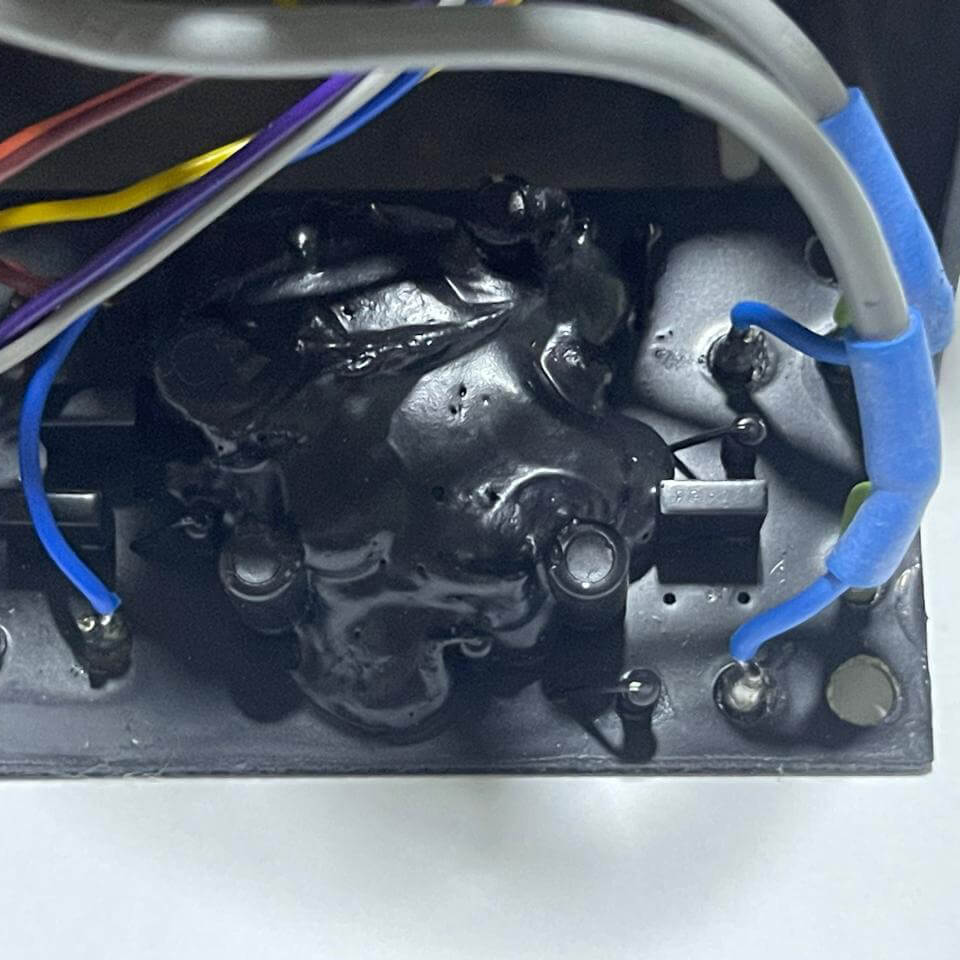
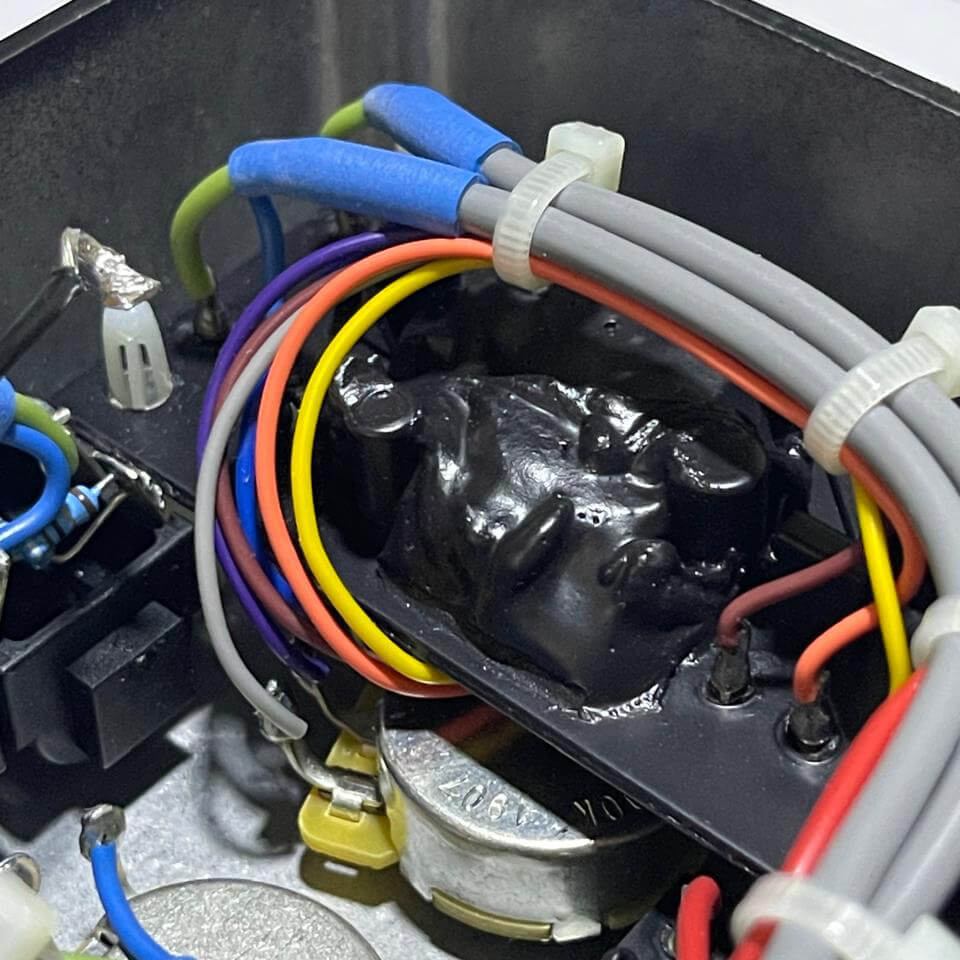
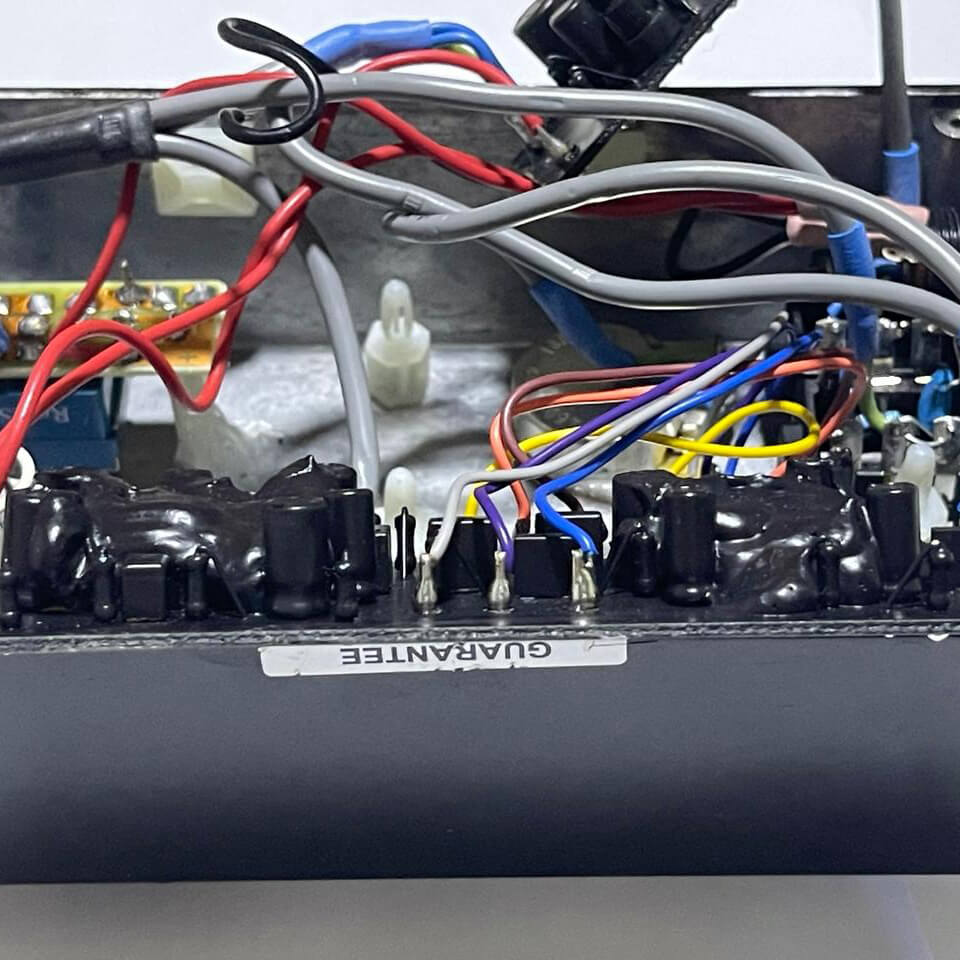
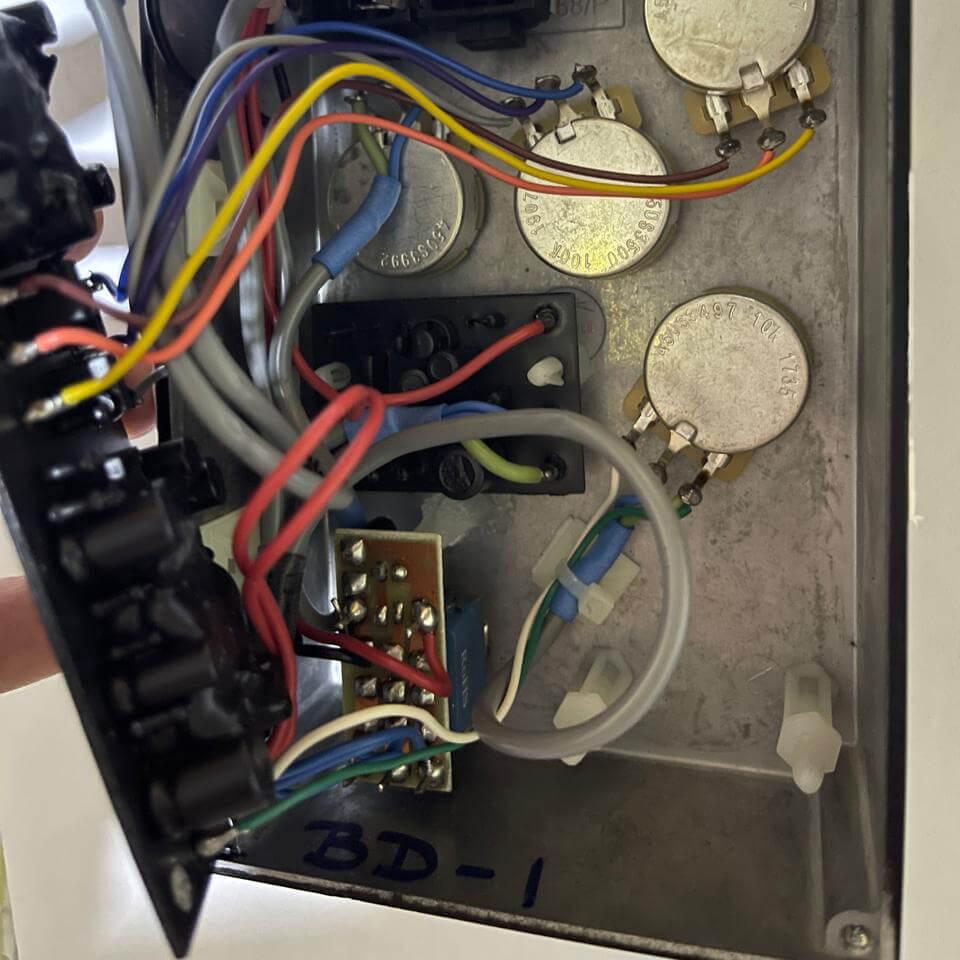
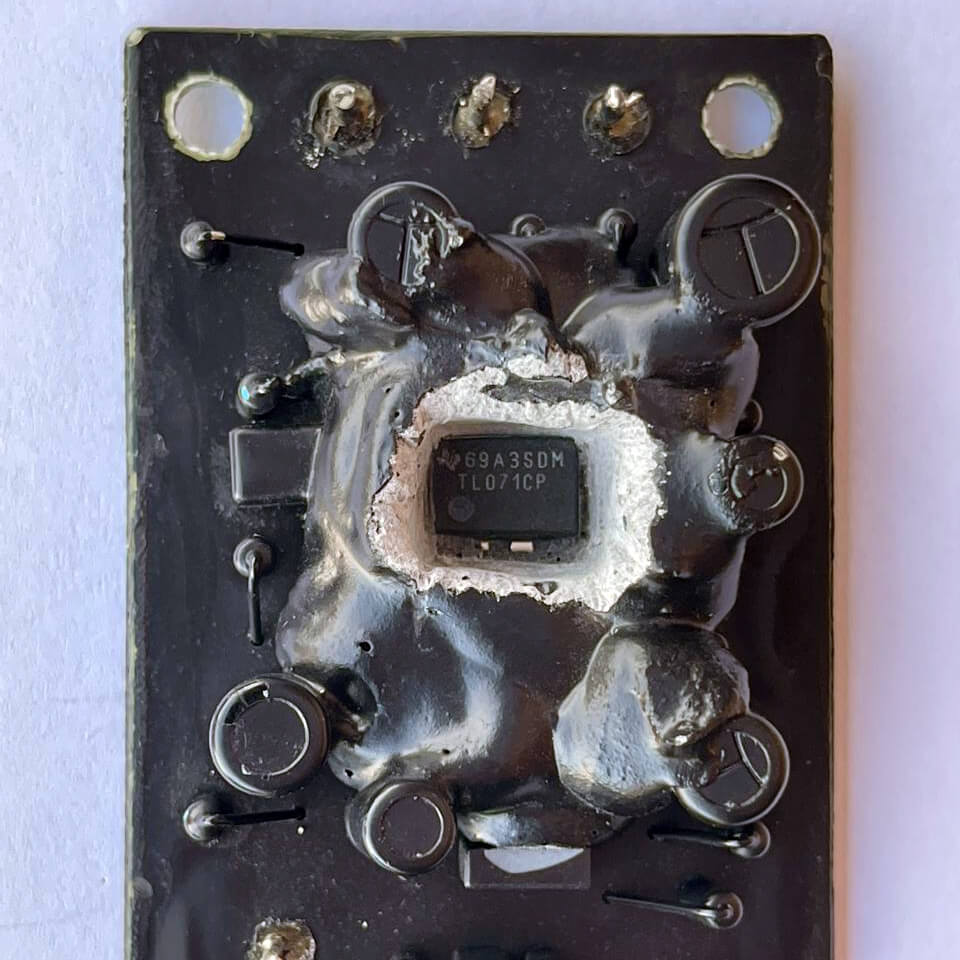
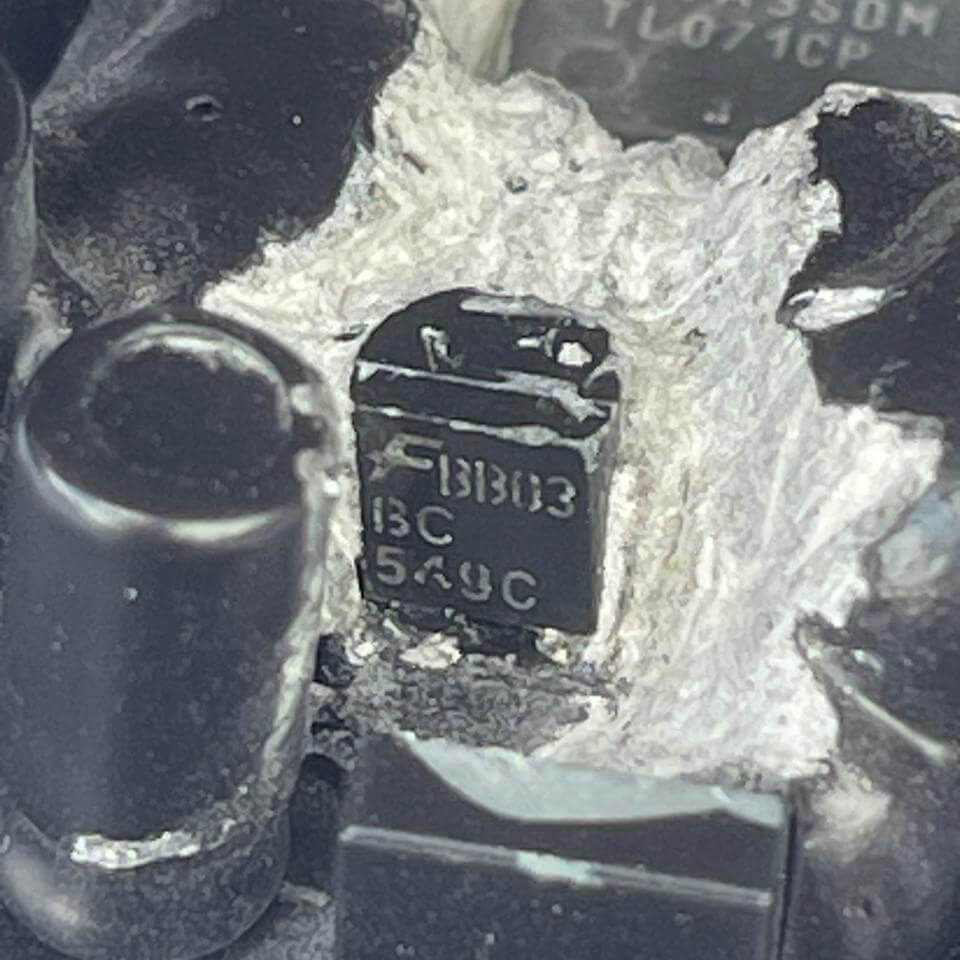
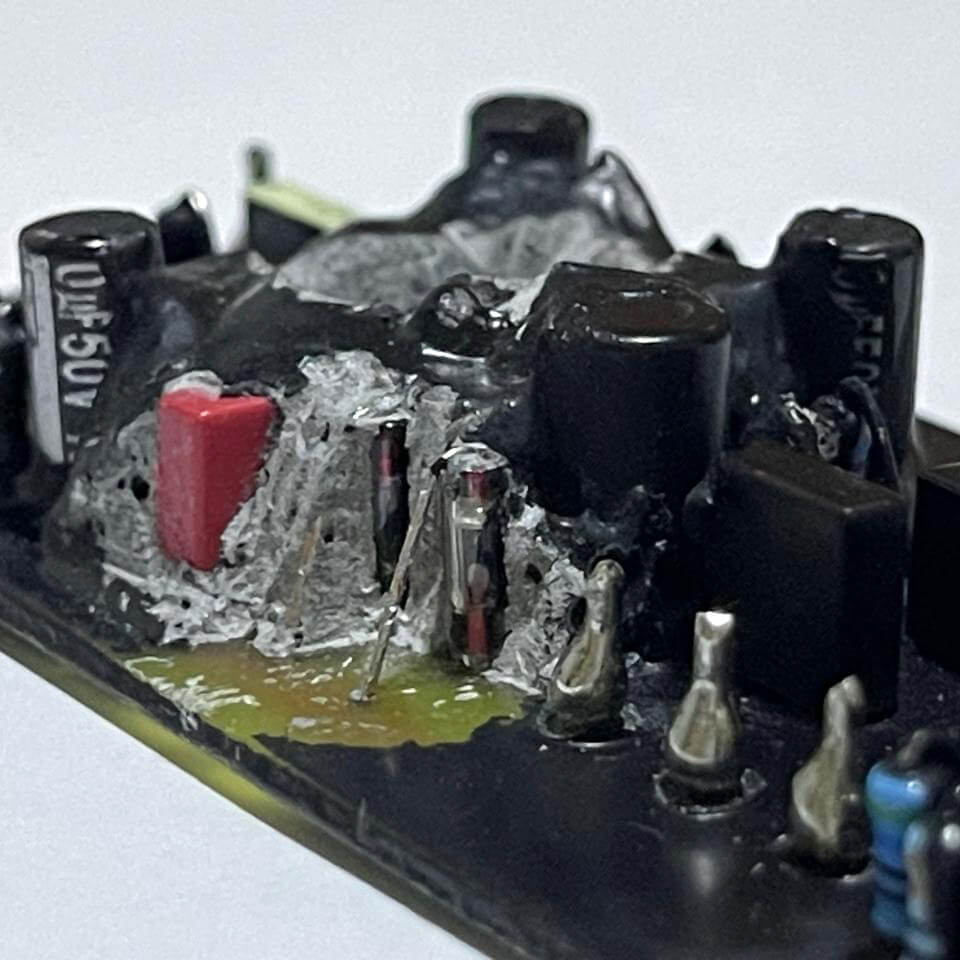
Tracing Photos
Schematic
Analysis
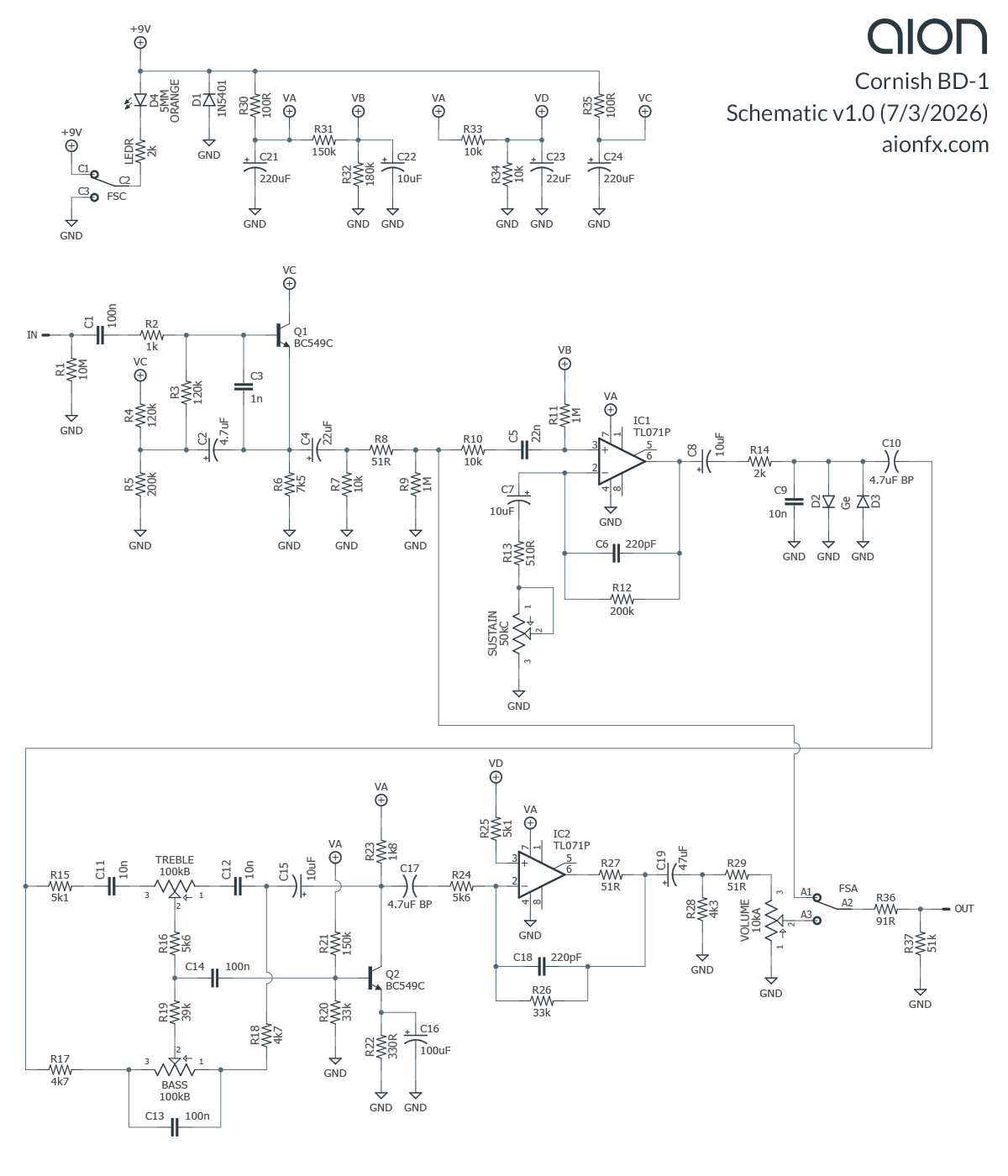
There are some clear similarities to the SS-2/SS-3 in that the front half of the circuit was adapted from the MXR Distortion+. After the buffer, we have a clean op-amp stage with adjustable gain that is followed by hard-clipping diodes to ground. The gain has been increased, and some capacitor values were changed to make it more suitable for bass, but the topology is the same.
This clipping stage is followed by a 2-band Baxandall EQ. These are most commonly implemented with op-amps, but we’ve only ever seen the transistor version in one other pedal: the Cornish ST-2.
The bass control is centered at 30 Hz, which is appropriately lower than guitar effects such as the CC-1 which is 70 Hz, or the BOSS FA-1 or Xotic BB Preamp which are more like 400 Hz. The treble control is centered at 3 kHz, which is a great frequency for bass effects, although it’s usually classified as upper-mids by audio engineers. Regardless, it’s the classic human voice frequency and it’s useful to help the instrument fill out more than just the low end.
After the Baxandall tone stack, there’s an op-amp gain stage that provides some extra available volume, which is also pulled from the ST-2 with some values changed. This op-amp is configured to invert the signal, correcting for the inverting tone stack. The output of the pedal should therefore be in-phase with the input, which means it will work well with an external blend pedal.
So is it original? Sort of. It doesn’t share the same PCB like the P-2/G-2 and CC-1/GC-1. But you could recreate the BD-1 schematic by taping the front half of the SS-3 to the back half of the ST-2 and changing a few of the values.
Whatever the case, it’s still a great-sounding circuit. There’s no need to reinvent the wheel if the circuit fragments do what they’re supposed to do.
Germanium diodes
The germanium clipping diodes used in the BD-1 are somewhat different than the ones in the G-2 that we traced. Here’s a Peak Atlas DCA75 curve comparing them:
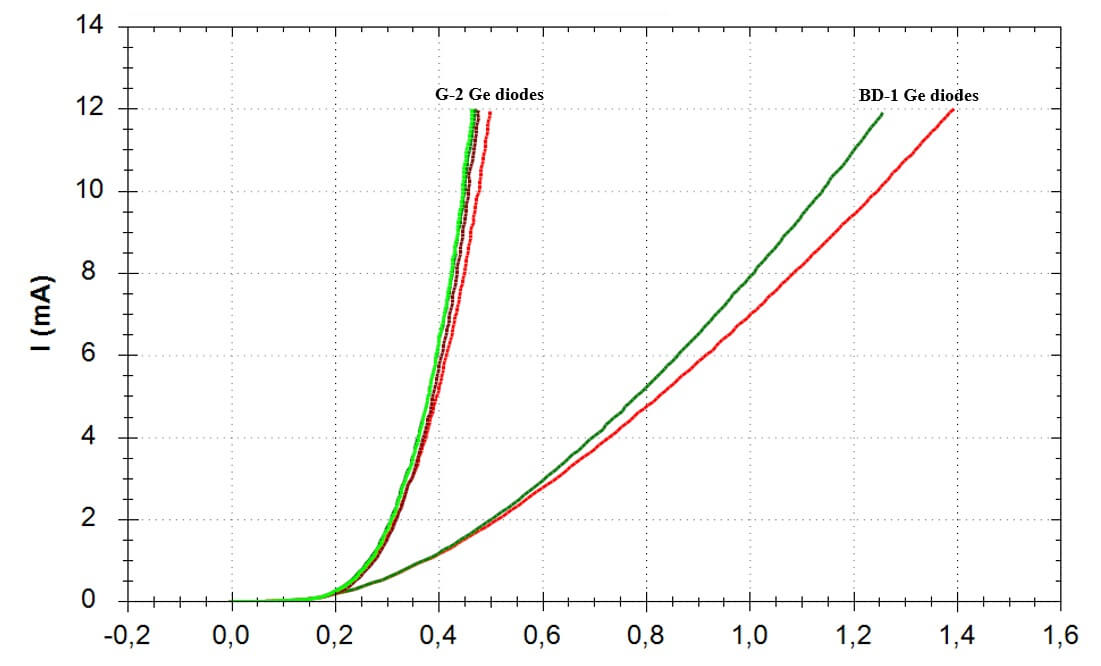
The current at this point in the BD-1 circuit is very low, so the real-world difference should look more like the lower part of the chart than the upper part. In other words, the forward voltage of the BD-1 diodes is probably no more than 0.1V above the G-2 diodes, not the 1V that you see at the extreme end of the graph. It’s also very possible that it’s just a matter of availability and that a G-2 made around the same time would use the same diodes as the BD-1.
Either way, don’t read into it too much. Any standard germanium diode should sound very close.
 Perseid Bass Drive
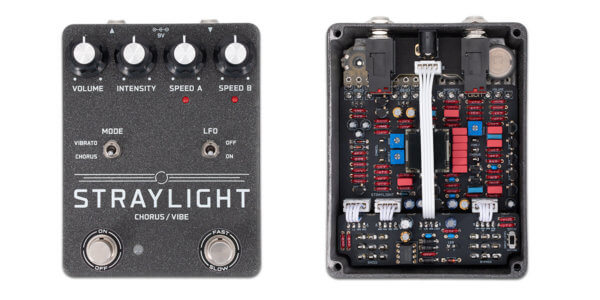
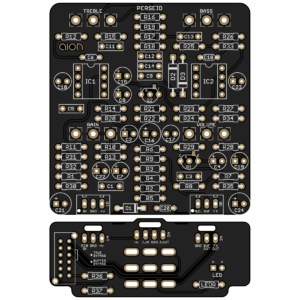
Releasing today is the Perseid Bass Drive, our adaptation of the Cornish BD-1. Like our other Cornish projects, this adds a switchable buffer, but the circuit is otherwise identical to the BD-1.
Disclaimer: Aion FX is in no way affiliated with Pete Cornish. Any trademarks are property of their owners and are used for comparative purposes only.